













Generative Engine Optimization (GEO): How to Get Your Brand Recommended by AI
Synopsis: A practical guide for businesses looking to increase their visibility in AI-powered search engines such as ChatGPT, Gemini, Claude, Perplexity, and Google AI Overviews.
The Search Revolution Has Already Started
For more than two decades, businesses have optimized their websites for search engines. Success meant ranking on the first page of Google, generating clicks, and converting visitors into customers.
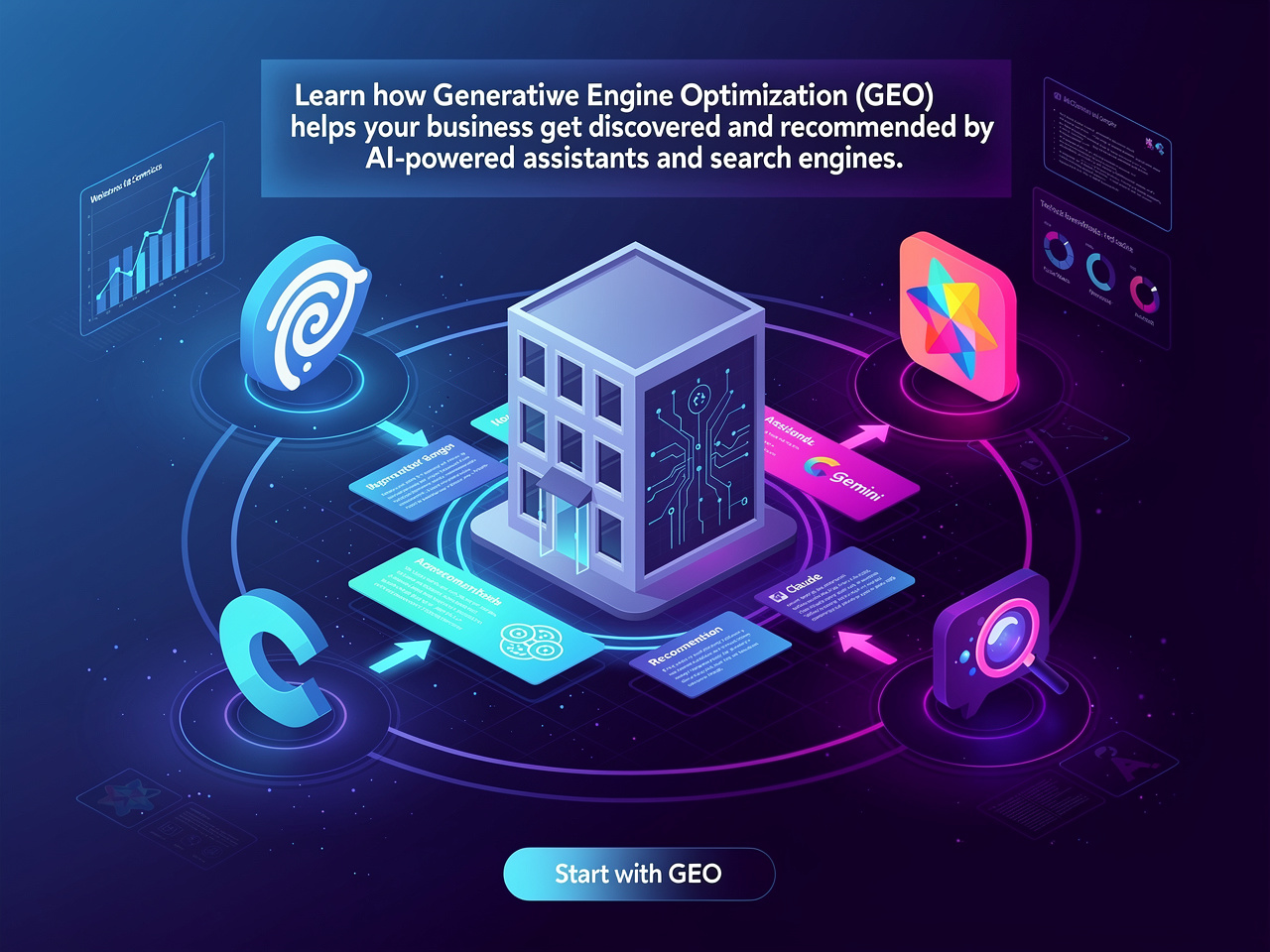
Today, that model is changing. Instead of showing users a list of websites, AI-powered search engines such as ChatGPT, Gemini, Claude, Perplexity, and Google AI Overviews increasingly provide direct answers.
When someone asks, “What is the best AI marketing automation platform?” they may receive a recommendation without ever seeing a traditional search results page.
This shift introduces a new challenge: how can your company become one of the brands AI engines choose to recommend?
The answer is Generative Engine Optimization, also known as GEO.
What Is Generative Engine Optimization (GEO)?
Generative Engine Optimization is the process of improving a brand's visibility within AI-generated responses.
Unlike traditional SEO, where the goal is to rank web pages, GEO focuses on helping AI systems understand who you are, what you do, why you are relevant, and when you should be recommended.
In simple terms: SEO helps people find you. GEO helps AI find and recommend you.
GEO vs Traditional SEO
| Traditional SEO | Generative Engine Optimization |
|---|---|
| Optimizes for search rankings | Optimizes for AI recommendations |
| Focuses heavily on keywords | Focuses on entities, authority, and usefulness |
| Click-driven | Answer-driven |
| Ranking position matters | Mention frequency and context matter |
| Search engines crawl pages | AI systems synthesize information from many sources |
Traditional SEO remains important. However, AI engines increasingly determine which sources deserve inclusion in generated answers. Businesses must now optimize for both humans and machines.
Why GEO Matters in 2026
The adoption of AI search is accelerating rapidly. Millions of users now begin research using ChatGPT, Gemini, Claude, Perplexity, and Google AI Overviews.
Instead of reading ten articles, users often consume a single AI-generated answer. If your brand is not represented in those answers, you risk becoming invisible during important buying moments.
Organizations that invest in GEO today are positioning themselves for long-term visibility as AI-powered search becomes a core part of how people discover products, services, and software platforms.
How AI Engines Decide Which Brands to Recommend
AI systems evaluate a variety of signals when forming recommendations. While each system works differently, the most important signals typically include authority, expertise, trustworthiness, consistency, citations, and structured information.
Authority
Is the brand recognized within its industry? Does it publish useful content? Is it mentioned by credible sources?
Expertise
Does the content demonstrate real knowledge of the subject, or does it simply repeat generic information?
Trustworthiness
Are claims clear, reasonable, and supported? Does the website explain what the company does in a transparent way?
Consistency
Are the brand message, positioning, product descriptions, and category signals consistent across the website and external channels?
Structured Information
Can AI systems clearly understand your product, audience, use cases, and expertise?
The Five Pillars of GEO
1. Become an Entity, Not Just a Website
AI engines increasingly understand businesses as entities. They want to understand what the company does, who it serves, what problems it solves, and when it is relevant.
A clear positioning statement dramatically improves discoverability.
For example: Solvra is an AI-powered marketing automation platform that enables businesses to generate campaigns, multilingual content, creative assets, and marketing workflows from a single interface.
2. Publish Topic Authority Content
AI engines favor businesses that consistently publish useful information around a defined category.
Rather than producing generic articles, focus on practical guides, frameworks, use cases, comparisons, and educational resources.
For Solvra, strong topic clusters include AI marketing automation, campaign generation, multilingual marketing, creative asset production, marketing workflow automation, and AI marketing ROI.
3. Structure Content for AI Consumption
AI systems prefer content that is easy to understand. Clear headings, FAQ sections, definitions, comparison tables, and step-by-step frameworks help both readers and AI engines interpret your expertise.
4. Build Brand Mentions Across the Web
AI systems learn from multiple sources. Mentions on industry blogs, review platforms, podcasts, social media, partner websites, and relevant publications can strengthen authority.
The more credible sources discussing your company, the more confidence AI systems have in recommending it.
5. Answer Real Buyer Questions
One of the best GEO strategies is creating content that directly answers the questions your buyers are already asking.
- What is AI marketing automation?
- How do I automate content creation?
- What are the best AI marketing tools?
- How can I launch multilingual campaigns?
- How do I measure AI marketing ROI?
These questions mirror how users interact with AI assistants.
GEO Strategies for SaaS Companies
SaaS companies have a unique opportunity to dominate AI search because their buyers often research tools, compare platforms, and ask AI assistants for software recommendations.
Comparison Content
Create articles that compare categories, approaches, and use cases. These can include topics such as AI marketing platforms, AI campaign builders, AI content tools, or workflow automation systems.
Use Case Pages
Build content around specific outcomes such as generating campaigns from a URL, creating multilingual assets, automating ad copy, or scaling marketing operations.
Educational Resources
Publish guides that teach buyers how to solve real problems. AI engines are more likely to reference useful, educational content than purely promotional pages.
Common GEO Mistakes
- Publishing generic AI-generated content with no original insight.
- Ignoring clear brand positioning.
- Chasing keywords without building authority.
- Failing to create structured answers and FAQs.
- Publishing inconsistently.
- Not building credibility through external mentions.
The strongest GEO strategies combine content quality, brand clarity, authority building, and consistent publishing.
The Future of GEO
The next phase of search will likely combine traditional search, AI-generated answers, conversational interfaces, and agent-driven recommendations.
Businesses that establish authority now will benefit from accumulated trust signals over time. Much like early SEO adopters gained advantages in Google, early GEO adopters can build advantages inside AI ecosystems.
Frequently Asked Questions
Is GEO replacing SEO?
No. GEO complements SEO. Businesses should optimize for both traditional search rankings and AI-generated recommendations.
Which AI engines should businesses optimize for?
The most important platforms include ChatGPT, Gemini, Claude, Perplexity, and Google AI Overviews. The underlying principles are similar across most AI discovery platforms.
How long does GEO take to work?
Like SEO, GEO is a long-term strategy. Most businesses should expect meaningful results after consistent publishing, clear positioning, and authority building over several months.
Does GEO require technical changes?
Some technical improvements can help, but content quality, authority, structure, and brand clarity remain the most important factors.
Conclusion
Generative Engine Optimization is rapidly becoming one of the most important digital marketing disciplines.
As AI assistants increasingly influence purchasing decisions, businesses must ensure they are discoverable, understandable, and recommendable.
Companies that invest in GEO today will be better positioned to capture future demand, increase brand visibility, and remain competitive in an AI-first world.
For organizations seeking to scale content creation, campaign execution, multilingual marketing, and AI-powered workflows, platforms like Solvra can help accelerate both marketing performance and AI search visibility.
Ready to Build Your Next Campaign in Minutes?
Generate campaigns, content, ads, emails, landing pages, creative assets, and multilingual marketing materials from a single AI-powered platform.
Start Free Today