















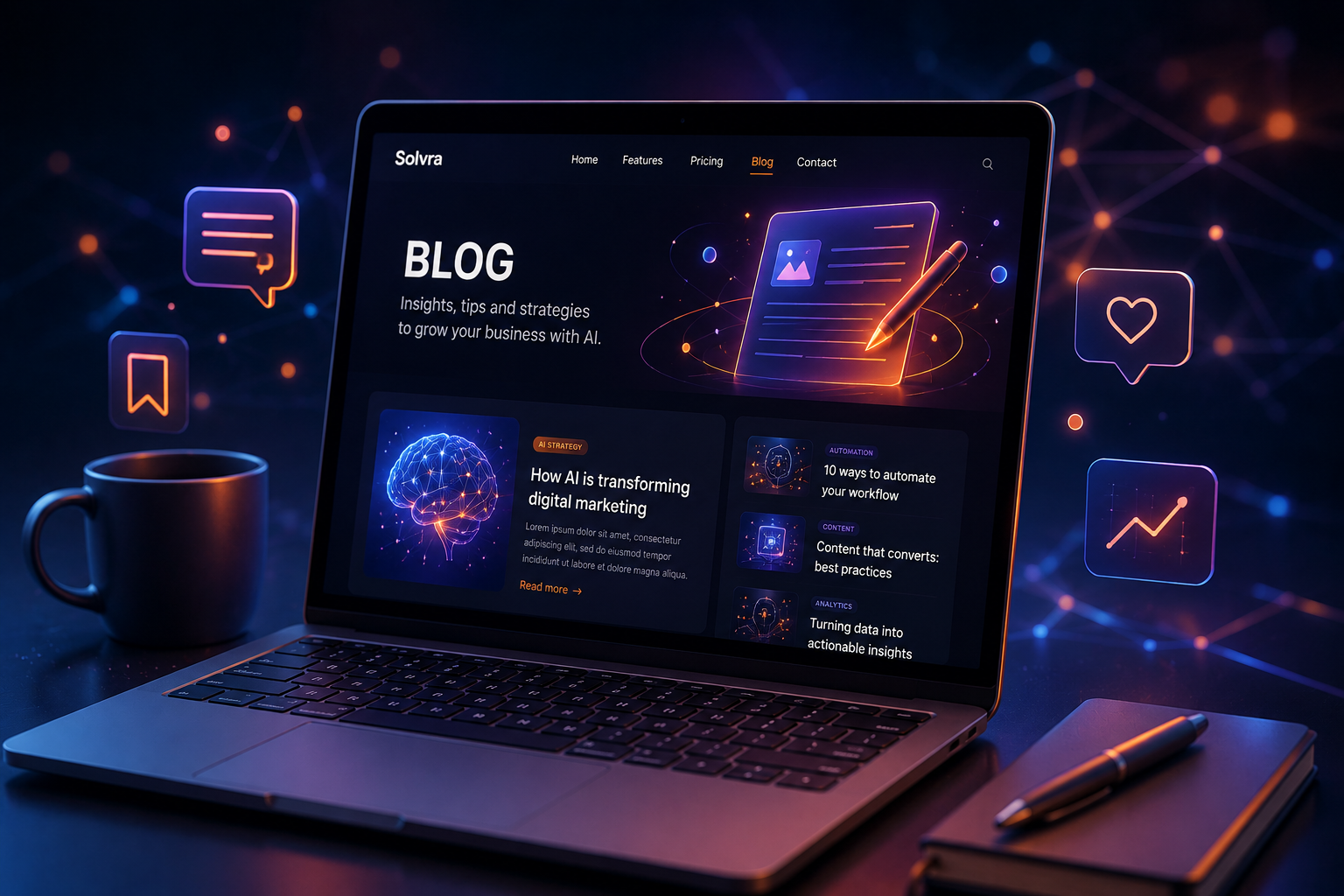
The Big Shift: From Campaign to System
In the past, marketing was built around campaigns: an idea, a message, design, distribution, and measurement. In the age of AI, this model is changing. Brands no longer need to think only about a single asset or one ad, but about an intelligent system capable of learning, adapting, and creating different versions of the same idea for different audiences, platforms, and moments.
This means marketing is becoming less linear and more dynamic. Instead of writing one brief and waiting for deliverables, marketing teams can build a strategic foundation, feed it into a system, and quickly generate messaging directions, visual assets, landing pages, and supporting content. The real advantage is not just speed, but consistency: every asset emerges from the same brand language and the same business objective.
AI as a Strategic Partner, Not Just an Execution Tool
A common mistake is to treat AI as a text machine or an image generator. In practice, the greater value lies in the thinking stage: analyzing audiences, identifying pain points, refining the value proposition, building messages by funnel stage, and understanding the connection between content and performance.
Brands that use AI only to produce more content may end up overwhelming their audience. Brands that use it to create more precise content, at the right time and in the right language, will be able to create a significant advantage.
In this era, the question is not how quickly you can produce, but how closely each deliverable is connected to the strategy.The Next Stage of Marketing
The future belongs to systems that connect insight, creative, execution, and measurement. AI makes it possible to turn marketing knowledge into a repeatable process that can be improved and easily scaled. When the system knows the brand, the audience, and the goal, every marketing action becomes part of one broader engine.